
Bicycle with or without pedals: which to choose and when to switch
Seeing your little one looking at a bike in the park is almost like a scene from a film: first they look at it, then they touch it… and suddenly they give you that ‘I want one too’ look. And that’s when the big question arises: a bike with or without pedals? The good news is that there isn’t just one right answer: there’s a better option depending on their stage of development (and on what you want them to learn first).
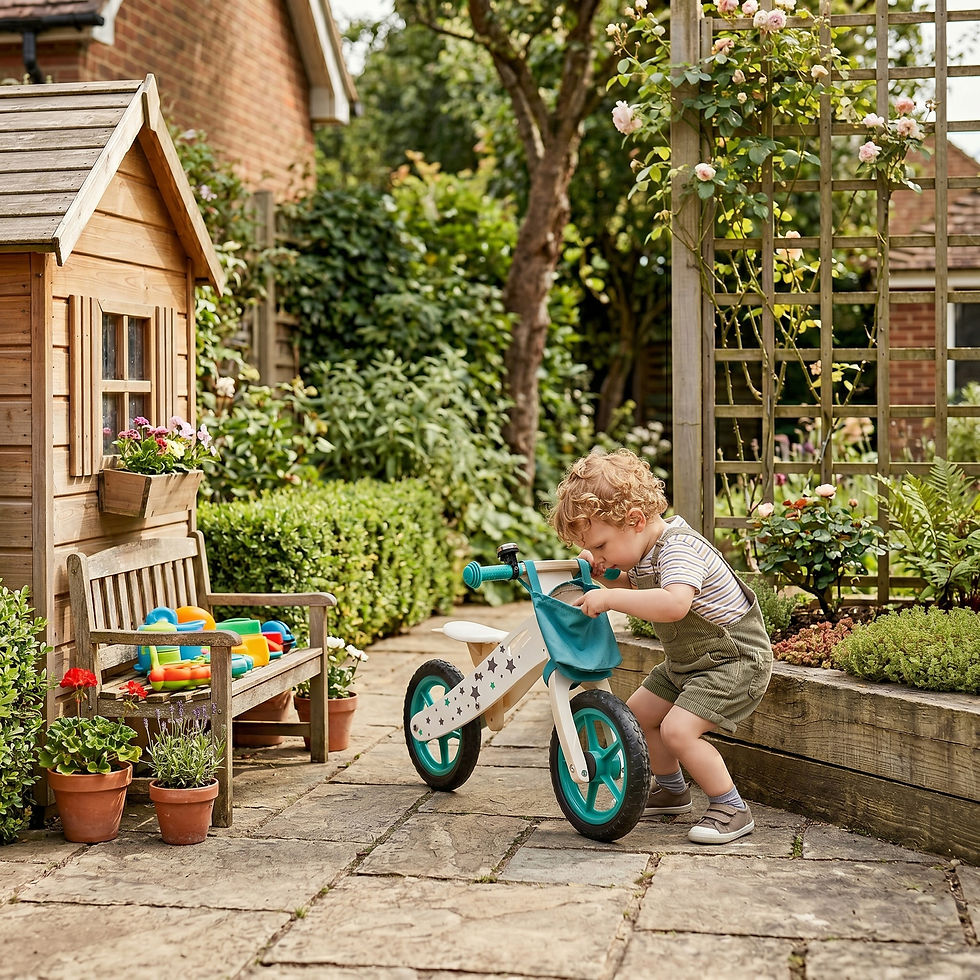
Balance bike: the quickest way to learn to balance
If your child is still at the ‘I push off with my feet and feel confident’ stage, a balance bike is usually the best choice. (Also known as a balance bike)
What they learn (even if all you see is fun)
True balance: learn to steady yourself and correct your posture whilst moving.
Direction and coordination: turning, looking, braking with your feet.
Confidence: being able to put your feet down gives you the confidence to try things sooner.
At what age does it usually work best?
As a general guide, it usually works very well once a child can walk steadily and reach the floor with their feet (many families start between 18 and 24 months, and others earlier if the little one is very steady). The key isn’t the exact age: it’s posture and control.

Bikes with pedals: when it makes sense to take the plunge
A bike with pedals is brilliant… when your child’s body and mind are ready. The biggest mistake is thinking, ‘If they can pedal, that’s it.’ In reality, the hardest part is keeping their balance (which is why the transition from a balance bike is usually so quick).
Signs that your little one is ready
They can coast along on a balance bike with their feet off the pedals for several seconds.
They can ride in a straight line and turn without ‘falling off’.
They want to go faster and get less frustrated by challenges.
They’ve got the hang of going up and down hills and can anticipate obstacles.
Training wheels – yes or no?
Training wheels can provide reassurance ‘at first’, but they teach many children a riding posture that they then have to unlearn. If your child already has a good sense of balance, it’s usually better to move straight to pedalling without training wheels (and with a lightweight, well-adjusted bike).

Quick decision: With or without pedals?
Choose a bike without pedals if:
It’s their first ‘proper’ bike.
They’re still developing their balance and coordination.
You’re looking for an easy transition to a bike with pedals and no training wheels.
Choose a bike with pedals if:
They’ve already mastered a balance bike (they can coast with control).
They have the strength and coordination to pedal without losing their balance.
They’re keen on longer rides.

Checklist for choosing the right bike
1) Size: it should touch the ground
When sitting on the saddle, you should be able to rest your feet firmly on the ground.
2) Weight: the lighter, the better
A light bike is easier to control (and easier to carry).
3) Adjustments that extend the bike’s lifespan
Adjustable saddle and handlebars = more months of actual use.
4) Basic safety
Always wear a helmet, ride in traffic-free areas, and spend your first few days on smooth surfaces.
How to teach cycling without tears (mini plan)
Day 1: balancing and short glides.
Day 2: practising setting off and braking (few repetitions, lots of celebration).
Day 3: fun ‘missions’ (going to fetch a leaf, going round a cone).
If you’d like a practical tip: balance first, then pedals. And if your little one has already mastered balancing, the transition to pedals can happen surprisingly quickly.


Comments