
At What Age Does Creativity Begin to Develop? A Stage-by-Stage Guide and 5 Tips
Creativity begins to be nurtured from the very first months of life, long before a baby can talk or walk. There is no “minimum age”: every sensory exploration, every game, and every question you ask are already creative stimuli. What does change with age is how you should encourage it.
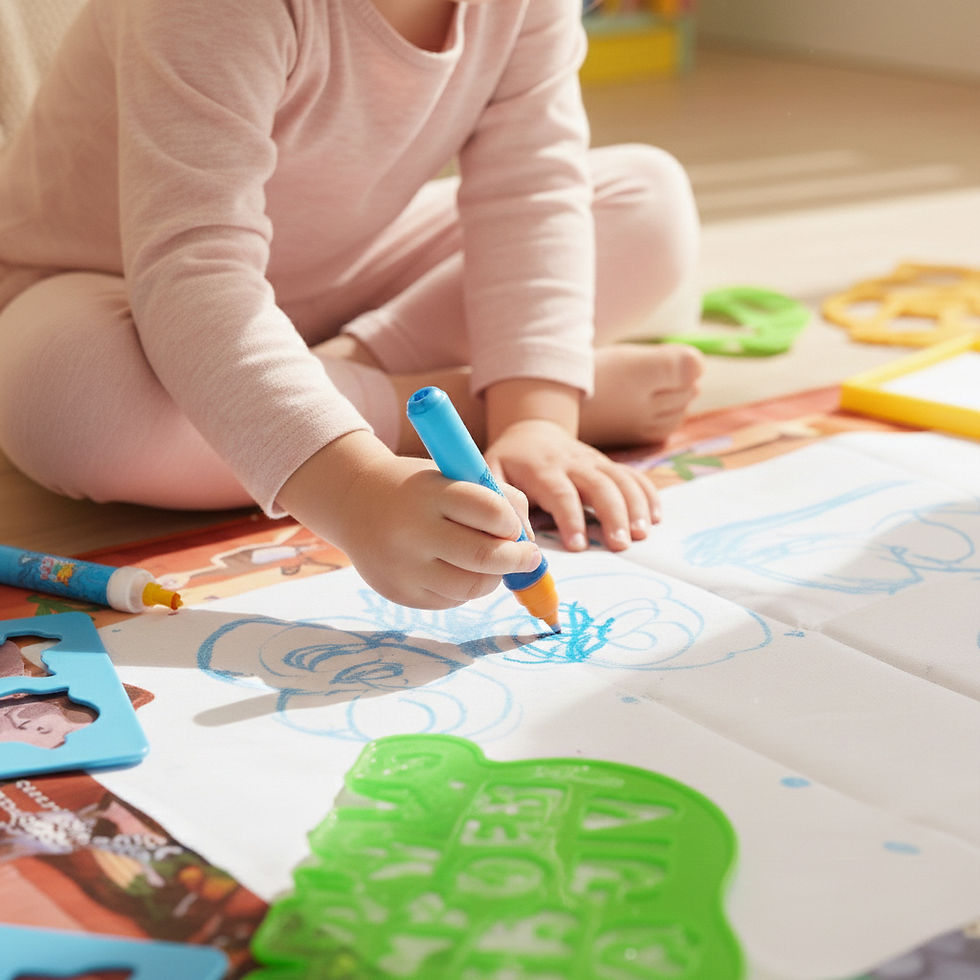
In this guide, you'll learn how creativity develops in stages (ages 0–1, 1–3, and 3–6) and discover 5 practical and safe tips you can start using today.
At what age does creativity begin to develop in children? When is the best time?
Babies' innate curiosity begins to show in their first weeks of life. Although we may not always notice it, every gesture or movement is a way for them to explore their surroundings.
Stage | What's going on? | How to Stimulate It |
0–1 year | Explore through the senses: everything you see, touch, and hear nourishes your powers of observation and imagination. | Sensory corners, textures, soft sounds. Here’s our guide to sensory activities for babies aged 6 to 12 months. |
1–3 years | The brain forms neural connections at a rapid pace. Free play and trial and error are its primary creative tools. | Symbolic play, painting, role-playing. |
3–6 years | He begins to plan his own games, makes up stories, and wants to "do things like grown-ups." | Dedicated play areas (play kitchens, learning towers, whiteboards), dialogue, and open-ended questions. |
There is no single starting point for fostering creativity: every child develops at their own pace. The important thing is for adults to begin stimulating creativity as early as possible to take advantage of the window of maximum brain plasticity during the early years, as shown by various studies on early childhood development.
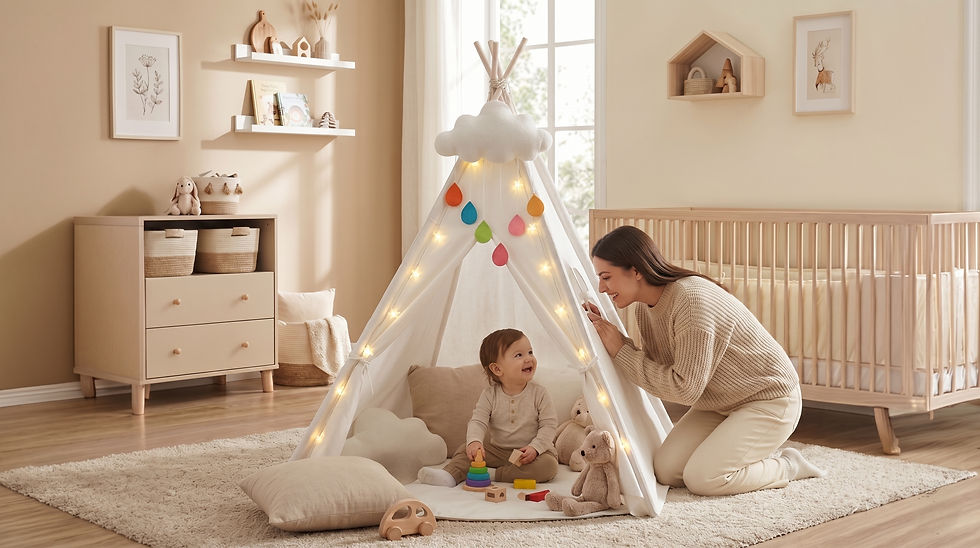
5 Tips for Fostering Creativity from an Early Age
Here are four practical tips to help your child express their creativity in a natural and fun way.
1. It offers the freedom to explore
Babies learn through free, undirected exploration.
Let them crawl and walk in safe spaces where they can explore.
Set up sensory corners with different textures and soft toys. Once they start crawling confidently, a Montessori cube offers various motor and sensory challenges all in one piece of furniture; if they’re already standing up, a Montessori walker supports them as they take their first steps in complete safety.
Let them touch everyday objects (always under supervision).
The goal is for them to engage with their surroundings without fear, feeling supported yet independent in their discoveries.
2. Encourages symbolic play and artistic expression
Symbolic play emerges early on: a spoon becomes a microphone, a box an imaginary car.
Keep safe, age-appropriate materials to hand: finger paints, non-toxic modelling clay, thick crayons.
Let them draw without expecting ‘perfect’ results: it’s the process that matters.
Provide them with their own space where they can paint without worrying about making a mess. A PaintHome painting house or a CreativeBoard double-sided whiteboard gives them the freedom to create without limits (and lets you stop worrying about the wall).
Activities like these help to develop their creativity and, at the same time, encourage language development and problem-solving.
3. Spend time reading and listening to music together
Literature and music are gateways to other worlds.
Read picture books with your child from a very young age; even if they don’t understand all the words, they’ll pick up on the intonation and the magic of the story.
Bring the story to life with different voices and gestures.
Expose your baby to different genres of music, from lullabies to lively rhythms, and watch how their body reacts.
This interaction enriches their vocabulary, their auditory perception and their imagination.
4. Stimulate their imagination with questions and conversation
A medida que crece, hablar y hacer preguntas abiertas es un gran aliciente creativo.
Ask them: “What would happen if…?”, “How do you imagine…?” or “Why do you think…?”.
Avoid correcting their ideas straight away; explore possible answers with them.
Listen carefully to their ideas and acknowledge them: this will boost their confidence and motivation to keep creating.
5. Set up a creative corner at home
No hace falta una habitación entera: un rincón bien pensado es suficiente para que la creatividad tenga un lugar propio.
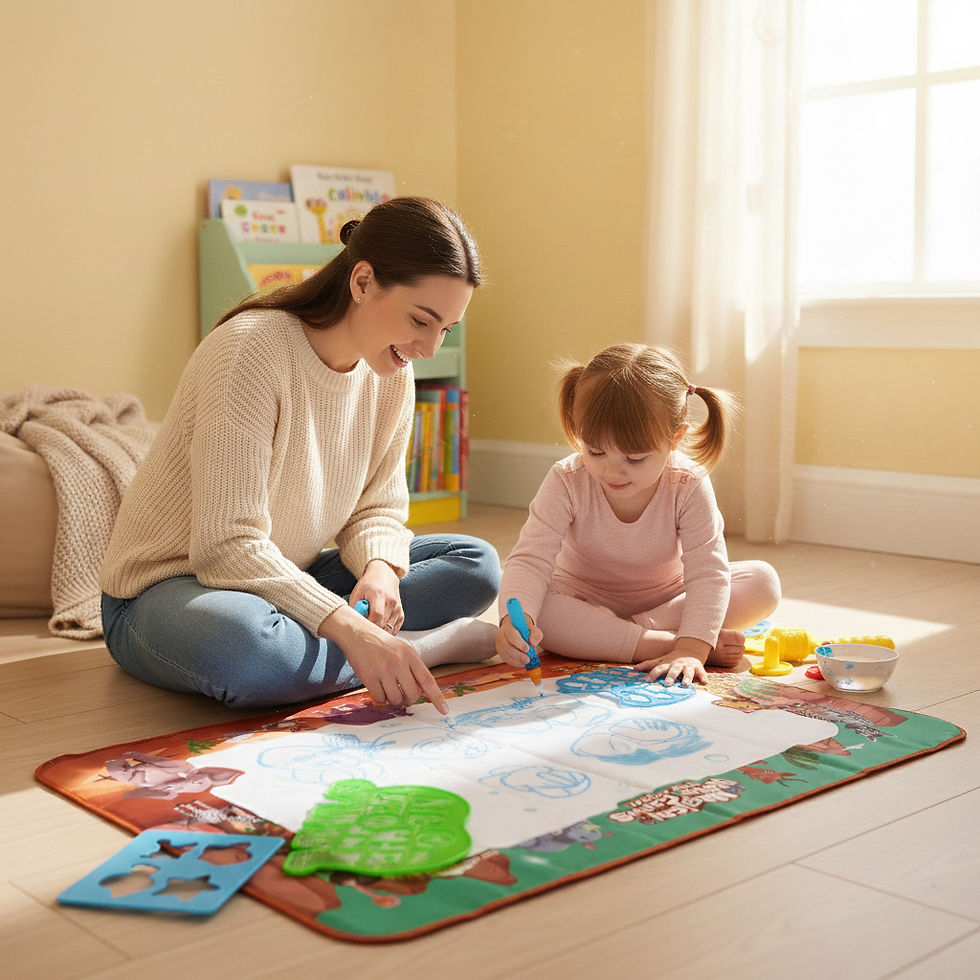
An AquaPint paintable magic mat turns the floor into a canvas without making a mess (using just water).
A children’s teepee gives them their own little hideaway where they can make up stories, read or play quietly.
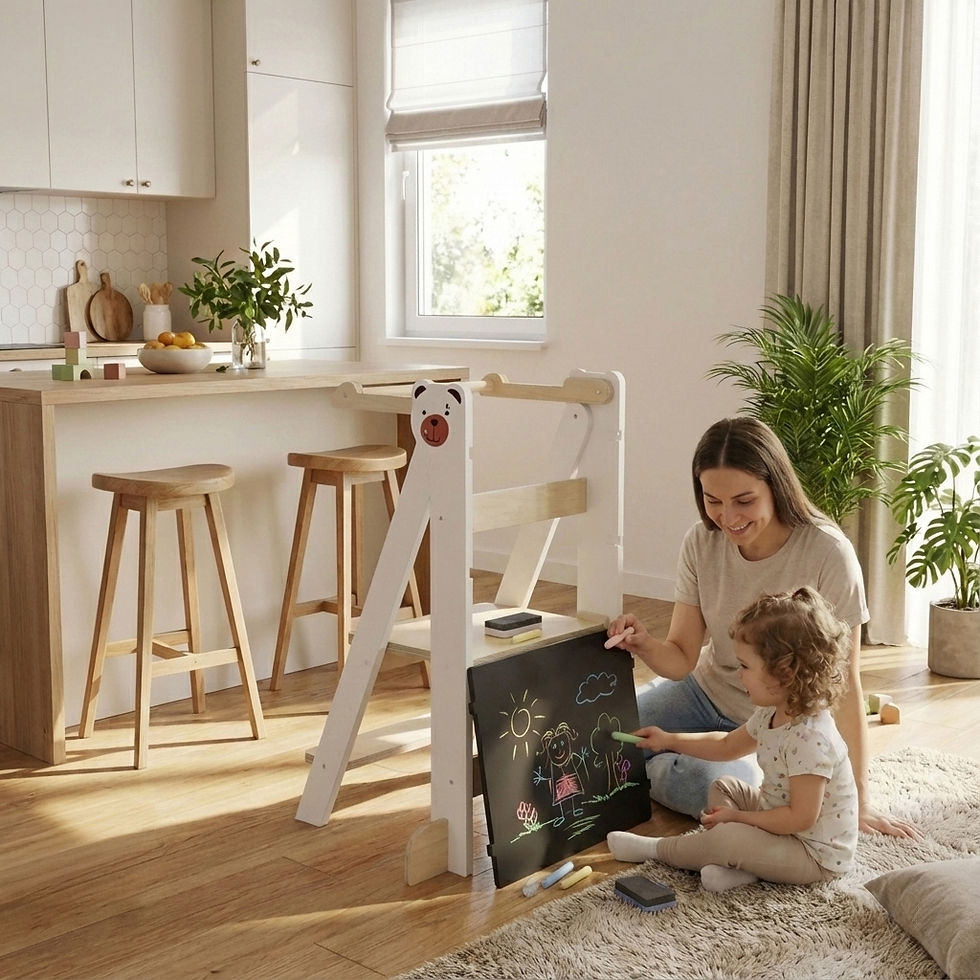
A learning tower lets them get properly involved in family cooking: kneading dough, decorating, ‘cooking’ in their own way – a safe role-play activity.
If you’d like to see the full range of furniture designed for this purpose, our ‘Creative Spaces’ collection features blackboards, houses for painting, paintable rugs and teepees specifically designed to stimulate the imagination at home. You can also read about how to apply the Montessori philosophy to every corner of your home in our guide to the Montessori method at home.
Frequently Asked Questions
Can creativity be encouraged in a baby who is just a few months old? Yes. Before the age of one, creativity is stimulated primarily through the senses: textures, sounds, colours and the freedom to explore a safe environment.
Which toys best encourage creativity? Those that don’t have ‘just one way to play’: chalkboards, play dough, Montessori blocks, houses for painting or fabrics for dressing up. The more open-ended the toy, the more imagination it requires.
How much time a day should be set aside to stimulate creativity? There’s no need for a fixed timetable. It’s enough to incorporate free play, reading and open-ended questions into the daily routine, without the need for scheduled ‘sessions’.
Can creativity be lost if it isn’t encouraged early on? It isn’t ‘lost’, but it can be greatly enhanced if it is nurtured from an early age, when the brain forms neural connections at a faster rate.
In summary
There’s no set age for fostering creativity: it’s the moment you decide to provide your little one with an environment full of stimulation and the freedom to explore. The sooner you start, the greater the benefits for their overall development.
Looking for ideas to set up their creative corner? Take a look at our collection of creative spaces 🎨


Comments